

What is FF&E? - A Guide to FF&E Design & Procurement
Every so often, a client will ask us "…what does FF&E actually stand for?" It's a fair question. The interiors world loves an acronym, and this one, despite governing a huge portion of any design project's budget, rarely gets explained in plain English. So let's put that right.
FF&E stands for Furniture, Fixtures & Equipment.
In short, it covers everything in a room that isn't structurally part of the building, the pieces you could, in theory, pick up and take with you. Sofas, dining chairs and case goods. Lighting, mirrors and artwork. Rugs, curtains and cushions. In a commercial or hospitality setting, it stretches further still, to reception desks, banquette seating, kitchen equipment and technology (although commercial electrical is often considered part of OS&E! And that is another blog post entirely! In a nutshell, we like to say in the Interiors world, that ‘if you tip a room upside down, anything that drops is your FF&E!
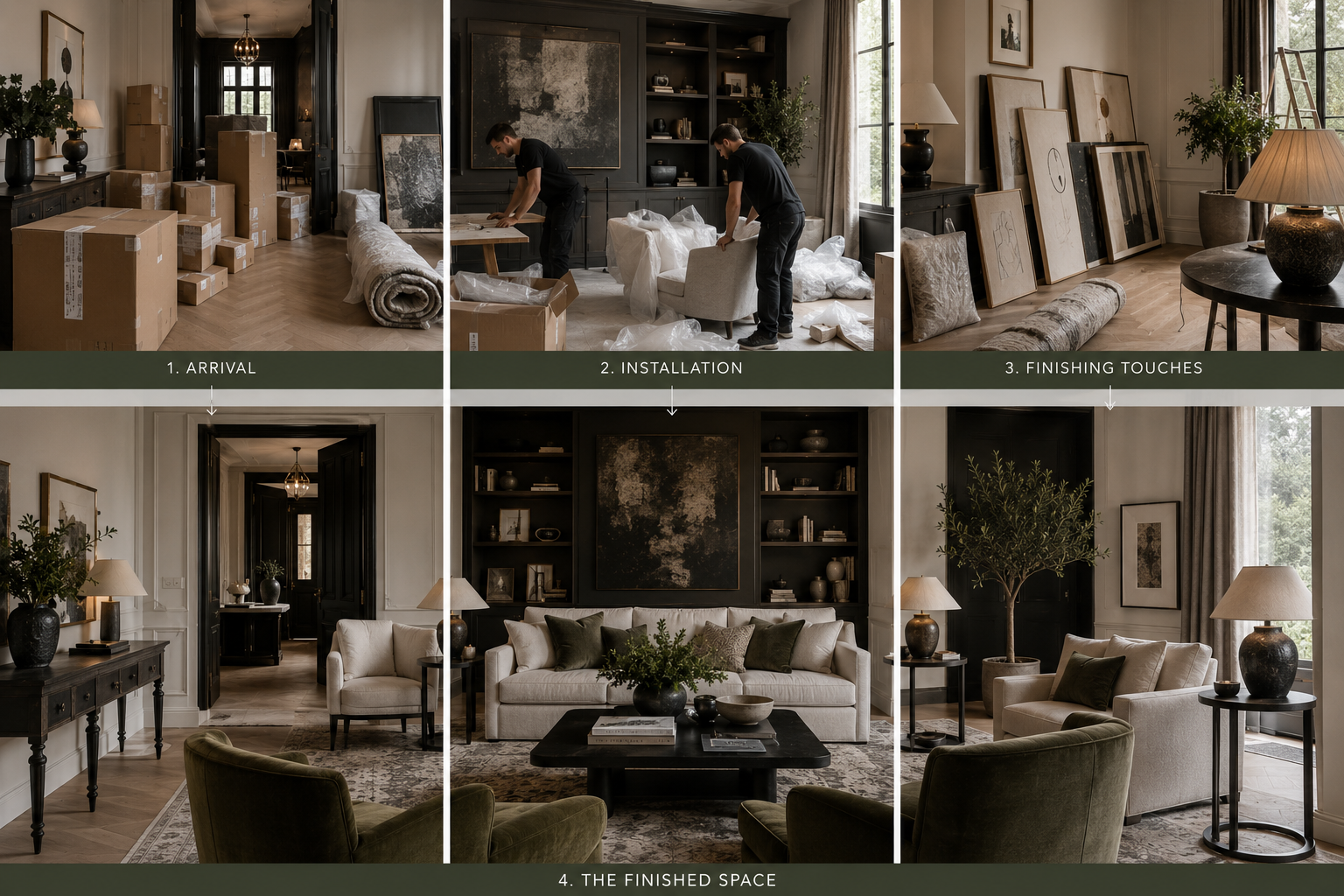
FF&E is, in other words, the part of a project that turns a well-built shell into a place people actually want to be. And FF&E design and procurement - the process of specifying, sourcing, ordering, tracking and installing all of it, is where a huge amount of the real work of interior design quietly happens.
At a glance, FF&E typically includes:
Sofas, armchairs and case goods
Lighting, pendants, lamps, wall and floor lights
Rugs, curtains and blinds (although it’s worth noting that some designers treat window dressings separately to FF&E)
Artwork, mirrors and decorative objects
Cushions, throws and other soft furnishings
In commercial settings: working desks, office chairs, reception desks, banquette seating, bar stools etc

It’s More Than a Shopping List!
It's tempting to think of FF&E as the fun part - the styling, the finishing touches, the bit you see in the "after" photos. And it is enjoyable. But behind every beautifully dressed room sits the procurement schedule. This is the working spine of a project. Every item logged against its supplier, lead time, price, quantity, room location and delivery date, cross-checked endlessly so that nothing arrives late, wrong, or not at all.
Good FF&E procurement is equal parts curation and choreography. It's knowing which upholsterer can hit a twelve-week lead time before Christmas, which supplier's "oak" is really solid oak, and how to sequence forty deliveries so the electrician isn't traipsing across the new rug! It also means negotiating fairly with suppliers, forecasting cost against programme as a project evolves, and checking every delivery's condition the moment it arrives…because a scratched console table is a Monday problem, not a launch-day one. Get it right, and it's invisible. Get it wrong, and it's the reason a beautiful room sits half-furnished for a month.
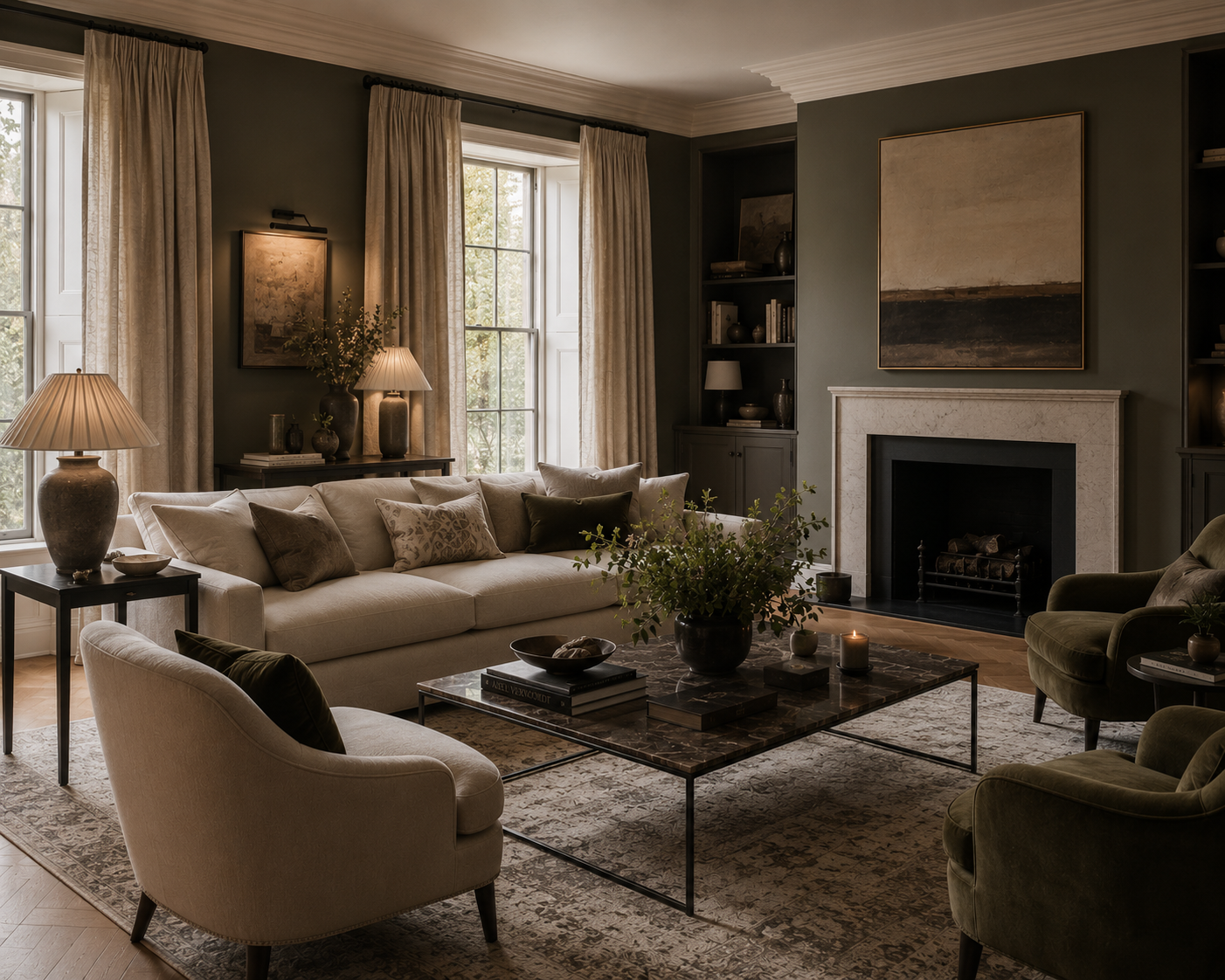
FF&E as Part of a Residential Project…
Imagine we’re designing the sitting room and snug of a family home. The architectural elements of the rooms have already been resolved. The flooring is chosen, the electrical and lighting plans are in place and the decorating scheme has been agreed. Now we need to make those rooms actually work for the people living in them, and that means finding a sofa that is not only beautiful, but comfortable enough to spend an entire Sunday afternoon on! It means a rug that works with the proportions of the room but can also cope with children, dogs and real life. Lighting that makes the room feel lovely at seven o’clock on a dark November evening, rather than simply looking good in a photograph for Instagram!
Then there are occasional chairs, side tables, lamps, curtains, cushions, artwork, mirrors and all the smaller details that begin to give a room its personality. None of those decisions really exist in isolation as the scale of the sofa affects the size of the rug. The position of a side table affects where a lamp can sit. The curtain fabric needs to work with the upholstery. The artwork needs to make sense within the proportions of the wall.
This is where FF&E design becomes considerably more than simply sourcing nice things, and crucially for the client, it also removes an enormous amount of time spent on decision-making. Rather than spending evenings with 37 browser tabs open trying to work out whether one chair works with another, we curate the scheme against the design brief, budget, practical requirements and programme.
We source it, specify it and procure it.
And when the inevitable happens, as it so often does!… a fabric is discontinued, a delivery date changes or a console arrives damaged, we deal with that too.
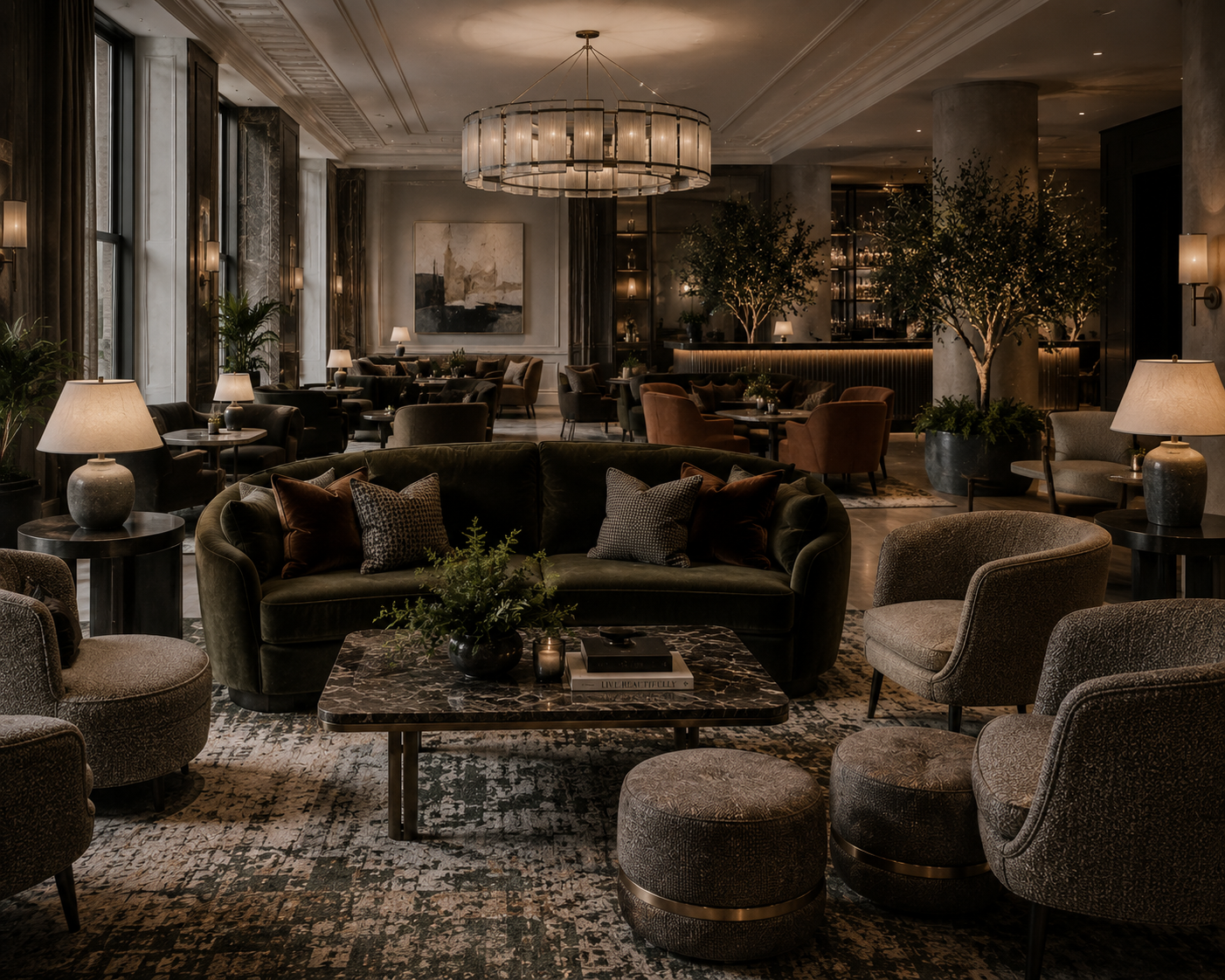
FF&E in a Commercial Setting
Now picture a boutique hotel refurbishing its ground-floor restaurant and bar. The stakes look different, but the process rhymes: everything down to the last barstool needs specifying, and it needs to work as hard as it looks good. Commercial FF&E has to satisfy fire safety and contract-grade durability standards, survive a nightly service rush, and still feel like somewhere worth booking a table.
Procurement at this scale is a serious operation. A schedule can run from dozens into hundreds of line items, across multiple trade accounts, freight arrangements and installation crews, all working towards a fit-out deadline that often simply cannot move. An experienced FF&E consultancy brings supplier relationships and contract-grade sourcing that most operators don't have in-house, a schedule robust enough to hold a multi-supplier rollout together, and the experience to solve problems before they become opening-night ones. Done well, it's the difference between a soft launch that feels effortless and one that doesn't.
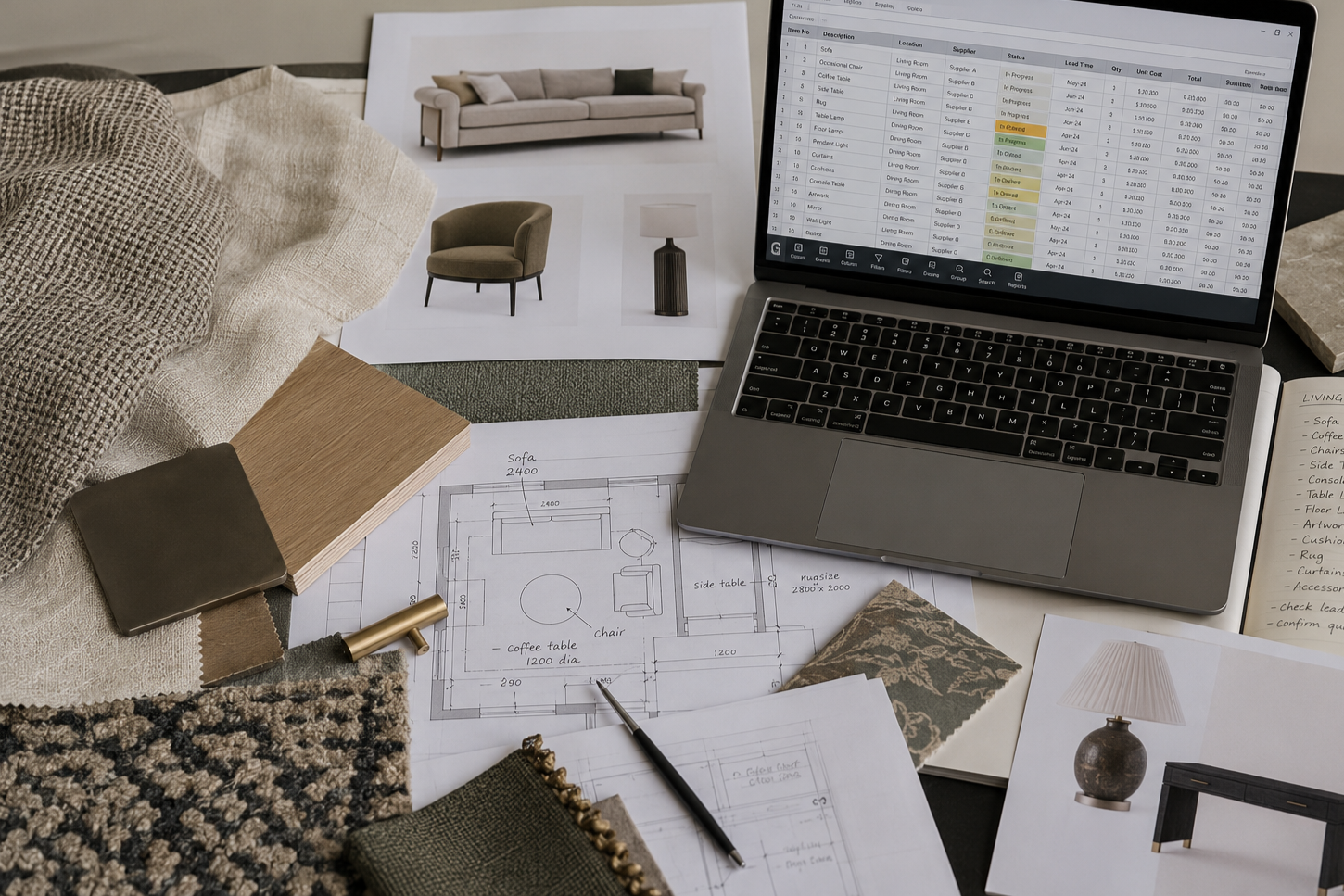
Where FF&E Sits Within a Full Service Design Project
Within a full-service interior design project, FF&E design and procurement is one thread in a much larger weave, running alongside layout, joinery, finishes and lighting design from the earliest concept stage right through to the final styling day. It's never bolted on at the end. Budgets are set early, so FF&E decisions inform (and are informed by) everything else: a bespoke banquette shapes the joinery brief; a statement light fitting shapes the electrical plan.
Handled this way, FF&E becomes part of the story of the room rather than a late addition to it, which is exactly why, in a full-service project, we manage it in-house from day one.
FF&E as a Standalone Service
Not every project needs, or wants, a full design overhaul. Sometimes the layout, architecture and finishes are already right and what's genuinely missing is the furniture, sourcing know-how and project management to pull it all together properly. That's precisely what a standalone FF&E consultancy offering is for: focused support on the furnishing and procurement layer alone, without redesigning everything around it.
It tends to suit a particular kind of client well:
Homeowners who've finished building or renovating and want the interior brought to life without starting the whole design process again.
Property developers and landlords furnishing show homes, serviced apartments or multiple properties, where consistency, programme and budget need careful management.
Architects and interior design studios who have developed the design but need an experienced procurement partner to handle specification, sourcing, ordering and logistics.
Hospitality and commercial businesses including hotels, restaurants, salons and offices - opening, refurbishing or refreshing spaces where programme, performance and budget all matter.
In each case, the value is the same: a single point of accountability for what gets bought, from whom, for how much, and when it lands, so our clients aren’t the ones chasing a supplier at 4pm on a Friday!
A Few Questions We're Often Asked
Is FF&E the same as interior design? Not quite. Interior design is the broader discipline, the layout, spatial planning, finishes, joinery, lighting design. FF&E is one part of that discipline: the furniture, fixtures and equipment that get specified and sourced within it. A designer might handle FF&E as part of a wider project, or a client might bring in FF&E support on its own.
What's the difference between FF&E and OS&E? In hospitality especially, you'll sometimes hear FF&E paired with OS&E, which is Operating Supplies & Equipment. Where FF&E covers the furniture and fixtures, OS&E covers what a business runs on day to day: linens, tableware, glassware, cleaning equipment. The two are often procured alongside one another for a hotel or restaurant opening.
Does FF&E procurement cost extra on top of the furniture itself? Typically, yes. Procurement is a service in its own right, usually priced as a percentage of spend or a fixed project fee, on top of the cost of the pieces themselves. In return, you get sourcing expertise, trade pricing that isn't always available to the public, and someone managing the (considerable) admin of it all.
Can I use an FF&E consultancy without a full design project? Yes! This is exactly what our standalone FF&E Consultancy is for. If your layout and finishes are already decided, the Studio Ray FF&E Consultancy can take on the furnishing and procurement layer alone.
So, What is FF&E?
At its simplest, FF&E is the collection of furniture, lighting, textiles, equipment, artwork and objects that allows an interior to actually become a a place people can comfortably live, work, stay or gather in. But getting all of those individual elements to work together, aesthetically, practically, financially and logistically, is a discipline in itself.
On a full-service interior design project, it is something we consider from the very beginning.
On other projects, our standalone FF&E consultancy allows us to step in specifically for this part of the process, whether that means furnishing a single home, supporting another design studio, rolling out a development or procuring hundreds of items for a commercial interior.
Because FF&E may contain some of the loveliest parts of a project. But it is very rarely just shopping!
If you're weighing up whether standalone FF&E support is right for your project, whether that's a single room, a development of show homes, a hospitality project or a commercial fit-out, get in touch with us at projects@studioray.co.uk we’d love to hear from you.